ByJohn A
AI in Restaurant Management
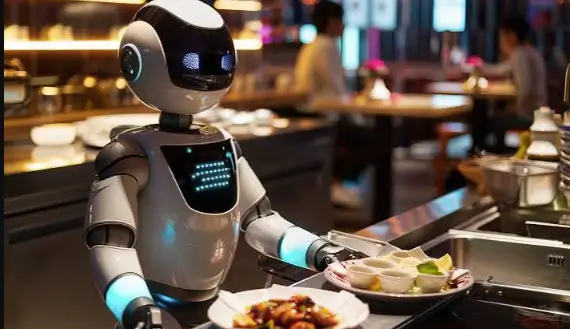
AI in restaurant management enables data-driven decisions across operations, demand forecasting, inventory optimization, and service. Predictive models anticipate customer flow, while stock levels align with anticipated demand, reducing waste and improving margins. Automated scheduling and service analytics refine staff deployment without sacrificing hospitality. Governance, ethics, and transparent data practices underpin deployment, ensuring trust and accountability. With measurable ROI and cross-functional alignment, AI promises scalable, lean menus and consistent experiences—yet decisions must balance efficiency with human-centered service as the next step.
What AI Is Doing for Modern Restaurants
AI is reshaping restaurant operations by enabling data-driven decision making across the entire service continuum. Modern venues leverage AI for analytics, autonomous scheduling, and customer personalization, translating data into actionable practices that streamline service, elevate consistency, and improve margins.
Ethical considerations guide implementation, with AI ethics and data governance shaping transparency, accountability, and secure data handling across platforms and partners.
Freedom-driven adoption promotes responsible innovation.
Predicting Demand and Optimizing Inventory With AI
Inventory optimization reduces waste, trims carrying costs, and stabilizes supplier commitments. For operators, AI offers visibility, scenario testing, and proactive adjustments, supporting lean, flexible menus and consistent service at scale.
Elevating Service and Experience Through AI-Driven Operations
The approach emphasizes AI ethics and data privacy within deployment strategies, ensuring transparent governance.
AI deployment reshapes staff roles and workload, highlighting staff impact while preserving human-centered hospitality, loyalty, and operational clarity across floors, kitchens, and service channels.
Choosing, Implementing, and Measuring AI for Your Kitchen and Floor
Selecting the right AI for kitchen and floor operations hinges on aligning technical capabilities with real-world workflows, data availability, and measurable outcomes.
Strategic AI budgeting informs tool choice and ROI, while kitchen automation targets efficiency gains.
Customer feedback guides iterative refinement, and staff scheduling is optimized via predictive models.
Implementations require clear metrics, cross-functional buy-in, and ongoing performance monitoring to sustain benefits.
Frequently Asked Questions
What Are the Cost Implications of AI Adoption in Small Restaurants?
Adopters weigh upfront costs against ongoing savings; pricing models vary, and ROI hinges on volume. Vendors differ in support and integration. A prudent restaurant considers total cost of ownership, vendor selection, and scalable pricing aligned with growth.
How Secure Is Customer Data Used by AI Systems?
Customer data security varies; measures exist but risk persists. Allusion opens the inquiry: data privacy shadows lurk, while model security stands guard. In industry terms, robust encryption, access controls, and regular audits balance freedom with safeguarding customer information.
Can AI Replace Human Labor or Only Augment It?
AI augmentation appears to primarily augment, not wholly replace, human labor; the trajectory indicates labor transformation, with technology handling repetitive tasks while people focus on nuanced service and strategic decisions, fostering freedom through complementary capabilities.
See also: polandmagazine
How Does AI Handle Food Safety and Compliance Monitoring?
AI food safety and Compliance monitoring are enhanced by real-time analytics, automated auditing, and sensor-based alerts; systems detect deviations, document incidents, and enforce standards, enabling proactive risk management while preserving operational autonomy for staff and managers.
What Metrics Truly Indicate ROI From AI in Dining Ops?
AI ROI metrics for dining ops center on incremental margin, labor optimization, inventory efficiency, and guest satisfaction lift; they measure payback period, confidence intervals, and long-term value, presenting a concise framework for investment decisions in AI-enabled operations.
Conclusion
AI in restaurant management: a quiet revolution reshaping operations with precision. By forecasting demand, optimizing inventory, and streamlining service, AI translates data into tangible margins and consistent guest experiences. The approach—transparent governance, ethical data use, and cross-functional buy-in—turns analytics into actionable improvements from kitchen to floor. As adoption scales, AI becomes the unseen engine driving lean menus, steadier supplier commitments, and measurable ROI—arguably the most elegant efficiency boost in modern hospitality. Hyperbole aside, its impact is transformational.